Choosing Loft Insulation for Your Home or Building Project
Loft insulation is commonly installed at ceiling level in a cold loft to reduce heat transfer through the roof space. Mineral wool rolls are widely used because they are lightweight, easy to handle and can be laid between and over ceiling joists in suitable applications.
Rose Building Supplies stocks Knauf Earthwool loft insulation rolls and Knauf OmniFit mineral wool insulation in different thicknesses and formats for loft upgrades, renovation projects and general thermal insulation work.
What Is Loft Insulation Used For?
Loft insulation is used to reduce heat transfer between the heated rooms below and the roof space above.
In a traditional cold loft, mineral wool insulation is commonly installed at ceiling level between and over the joists, leaving the roof space above colder than the rooms below.
What Loft Insulation Do You Stock?
Our current range includes Knauf Earthwool Combi Cut Loft Insulation Roll 44 in 100mm and 150mm thicknesses, alongside Knauf OmniFit Loft Roll 40 and OmniFit thermal and acoustic mineral wool slabs.
Stock availability can vary by branch, so check the individual product page or contact our team if you need a specific thickness or quantity.
What Is Knauf Earthwool Loft Roll?
Knauf Earthwool Loft Roll is a glass mineral wool insulation designed for suitable cold loft applications at ceiling level.
The Combi Cut format is designed so the roll can be separated into narrower widths to suit common joist spacings, which can make installation more convenient.
What Is the Difference Between 100mm and 150mm Loft Insulation?
The main difference is insulation depth and thermal resistance.
A thicker mineral wool layer generally provides greater thermal resistance, but the correct total depth depends on the existing loft insulation, the construction and the required thermal performance.
Do not choose insulation thickness by product price alone. Check the existing build-up and any project or Building Regulations requirements before ordering.
Can I Add New Loft Insulation Over Existing Insulation?
In many suitable loft upgrades, additional mineral wool can be laid over existing insulation to increase the overall insulation depth.
Before adding more insulation, check the condition of the existing material and make sure there are no unresolved problems with damp, leaks or ventilation.
Where the first layer sits between joists, an additional layer may be installed across the joists where appropriate, following the manufacturer's guidance.
Should Loft Insulation Go Between or Over the Joists?
Mineral wool loft insulation is commonly installed between ceiling joists, with additional insulation laid over the joists where a greater total depth is required.
The exact arrangement depends on the loft construction and the required thermal performance.
How Much Loft Insulation Do I Need?
First measure the loft floor area in square metres. Then compare this with the coverage stated on the individual insulation product.
Allow for the layout of the loft, joist spacing and any areas that cannot be insulated in the normal way.
If you provide the approximate loft dimensions and the product you are considering, our team can help you estimate the number of packs required.
How Do I Calculate Loft Area?
For a simple rectangular loft, multiply the length by the width to calculate the approximate floor area in square metres.
For irregular roof spaces, divide the area into smaller rectangles, calculate each section separately and add them together.
What Is Mineral Wool Loft Insulation?
Mineral wool insulation is a fibrous insulation material used for thermal and acoustic applications.
Glass mineral wool products such as Knauf Earthwool are commonly supplied as compressed rolls or slabs, allowing them to be transported and installed efficiently.
Does Loft Insulation Help with Sound?
Mineral wool can provide acoustic as well as thermal performance, depending on the product and application.
Products such as Knauf OmniFit are designed for both thermal and sound insulation across suitable building applications.
What Is Knauf OmniFit?
Knauf OmniFit is a multi-application glass mineral wool insulation range designed to provide thermal and acoustic performance.
The range includes rolls and slabs that can be used in suitable timber and steel frame applications as well as other compatible insulation projects.
If you are insulating a conventional cold loft, compare the product specification carefully with dedicated loft-roll products before choosing.
Loft Roll vs Insulation Slabs - Which Should I Choose?
Loft rolls are convenient for covering larger horizontal areas and are commonly used between and over ceiling joists.
Mineral wool slabs are semi-rigid and can be useful where a firmer insulation format is required or where the product specification suits the construction.
The right choice depends on the loft structure and the intended application.
Can I Use PIR Boards in a Loft?
PIR insulation boards can be used in suitable roof and loft constructions, but they are not a direct substitute for mineral wool in every loft application.
PIR is commonly used where rigid insulation is required within a pitched roof, between rafters or as part of another specified roof build-up.
For a traditional cold loft insulated at ceiling level, mineral wool rolls are commonly used.
What Is the Difference Between a Cold Loft and a Warm Roof?
In a cold loft, insulation is generally installed at ceiling level, so the loft space above remains outside the heated part of the building.
In a warm roof or insulated roof construction, insulation is positioned within or around the roof structure so the space below the roof covering forms part of the insulated building envelope.
The correct insulation product and position depend on the roof design.
Does Loft Insulation Need Ventilation?
Roof-space ventilation must not be unintentionally blocked when installing or upgrading loft insulation.
Good ventilation helps manage moisture within suitable cold-roof constructions, so take care around eaves and existing ventilation paths and follow the roof design and manufacturer's guidance.
Can Loft Insulation Cause Condensation?
Insulation itself should form part of a correctly designed roof system. Condensation risk depends on factors such as ventilation, moisture movement and the overall construction.
If there is existing damp, condensation or a roof leak, investigate the cause before covering the area with new insulation.
Can Loft Insulation Cover Electrical Cables or Downlights?
Care is required around electrical cables, recessed lights, transformers and other heat-producing equipment.
Follow the electrical manufacturer's guidance and current installation requirements. Do not simply cover electrical components with insulation where doing so could cause overheating or create a safety issue.
Can I Walk Directly on Loft Insulation?
No. Mineral wool insulation is not a walking surface.
If the loft needs storage or regular access, a suitable raised boarding system may be required so that the insulation is not compressed.
Compressing mineral wool can reduce its effective thickness and thermal performance.
Do I Need PPE When Installing Mineral Wool?
Follow the manufacturer's safety instructions when handling and cutting mineral wool insulation.
Suitable gloves, protective clothing, eye protection and respiratory protection may be required depending on the product and installation conditions.
When Is a Good Time to Upgrade Loft Insulation?
Autumn is a practical time to inspect and upgrade loft insulation before colder winter weather, particularly if the existing insulation is thin, damaged or incomplete.
Completing the work before the coldest part of the year can also be more convenient than working in the loft during winter conditions.
What Else Might I Need for a Loft Insulation Project?
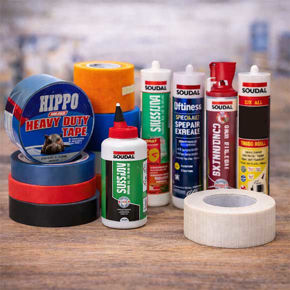
Depending on the project, you may also need roof-space access products, timber, plasterboard, suitable tapes, sealants, PPE and other building materials.
Loft Insulation in Peterborough & Huntingdon
Loft insulation is available for collection from our Peterborough and Huntingdon branches, subject to stock availability.
Our insulation range supports builders, tradespeople, landlords and homeowners working on loft upgrades, renovations, extensions and other thermal insulation projects.
Loft Insulation Delivery to Corby
Rose Building Supplies provides suitable loft insulation delivery to the Corby area.
Corby is a delivery-only service area and does not have a Rose Building Supplies branch or collection point.
Need Help Choosing Loft Insulation?
If you are unsure which loft insulation product or thickness you need, check the existing insulation depth, loft construction, project specification and the coverage required.
Contact our team with your loft dimensions and product requirements and we can help you compare suitable mineral wool rolls and insulation options from our range.