Search

Show prices tax inclusive Show prices tax exclusive
Show prices tax inclusive




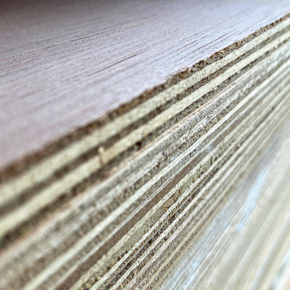




Sheet Materials
Rose Building Supplies stocks a wide range of sheet materials for construction, joinery, flooring, roofing, furniture and interior projects. Shop plywood sheets, MDF boards, OSB boards, chipboard flooring and EGGER DecoWall wall panelling in a range of sizes, thicknesses and specifications. Sheet materials are available for collection from our Peterborough and Huntingdon branches, subject to stock availability, with local delivery across surrounding areas and a delivery-only service to Corby. If you still need some assistance, please call into your local branch for advice.


5.5mm Hardwood Plywood 2440x1220mm (8x4) EN636-2S Class 3
5.5mm Hardwood Plywood 2440x1220mm (8x4) EN636-2S Class 3 - Meyer Classic is a Eucalyptus Faced Poplar core plywood meeting the requirements of EN636-3 and achieves a bond class rating of EN314-2 Class 3. The class 3 rating of this panel means it is suitable for use in exterior applications, provided the faces and edges are sealed with appropriate treatment. The plywood is suitable for structural use in buildings and is rated CE2+. Typical uses can include, roofing, flooring, furniture, shop fitting and wall sheathing, site hoarding and general construction applications.
Stock Availability: In stock
From £13.75 incl tax

9.0mm Hardwood Plywood 2440x1220mm (8x4) EN636-2S Class 3
9.0mm Hardwood Plywood 2440x1220mm (8x4) EN636-2S Class 3- Typical uses can include, roofing, flooring, furniture, shop fitting and wall sheathing, site hoarding and general construction applications.
Stock Availability: In stock
From £20.47 incl tax

CaberFloor Moisture Resistant Chipboard Flooring P5 TG4 2400x600x18mm
CaberFloor Moisture Resistant Chipboard Flooring P5 TG4 2400x600x18mm is high density flooring panel. With square edge or tongue and groove options, it provides a durable surface for internal structural flooring in new builds, extensions and renovation projects.
Stock Availability: In stock
From £12.49 incl tax

CaberFloor Moisture Resistant Chipboard Flooring P5 TG4 2400x600x22mm
CaberFloor Moisture Resistant Chipboard Flooring P5 TG4 2400x600x22mm is high density flooring panel. With square edge or tongue and groove options, it provides a durable surface for internal structural flooring in new builds, extensions and renovation projects.
Stock Availability: In stock
From £14.50 incl tax

CaberShield ECO Waterproof Chipboard Flooring P5 TG4 2400x600x22mm
CaberShield ECO Waterproof Chipboard Flooring P5 TG4 2400x600x22mm has a tough, permanent, solvent free, UV-cured waterproof coating on the upper surface. Its slip-resistant finish makes it ideal for flooring before a building is fully weatherproof and when construction mess is still possible.
Stock Availability: In stock
From £24.49 incl tax

11mm OSB/3 2440x1220mm S/E Structural Board FSC
11mm OSB/3 Smart Ply S/E Structural Board 2440x1220mm -is a load-bearing wood-based panel product engineered for structural use in humid environments. It is free from knots and voids, ensuring reliability and durability.
Stock Availability: In stock
From £19.00 incl tax

12mm Hardwood Plywood 2440x1220mm (8x4) EN636-2S Class 3
12mm Hardwood Plywood 2440x1220mm (8x4) EN636-2S Class 33 - Typical uses can include, roofing, flooring, furniture, shop fitting and wall sheathing, site hoarding and general construction applications.
Stock Availability: In stock
From £25.69 incl tax

12mm Moisture Resistant MDF Board 2440x1220 FSC
12mm Moisture Resistant MDF Panel 2440x1220 is perfectly suited for painting, and grain printing. It is easily cut with saws, drills, shapes and routs. Being resistant to moisture makes it ideal for use in bathroom and kitchen furniture, skirting boards, window sills as well as door architraves.
Stock Availability: In stock
From £24.49 incl tax

CaberFix Tape 50m Roll
CaberFix Tape 50m Roll Used to maintain the integrity of the surface protection film for laid boards. For sealing panel perimeters to walls and for sealing joints during construction phases.
Stock Availability: In stock
£11.76 incl tax

Egger D4 Joint & Joint Adhesive Glue 1L
Egger Joint & Joist D4 Adhesive is a high-performance expanding D4 glue designed for use on timber joists and tongue and groove chipboard flooring. It helps create a strong, secure bond between boards and joists, making flooring installation more reliable while helping to reduce movement and squeaks.
Stock Availability: Out of stock
£13.69 incl tax

12mm Standard MDF Sheet 2440x1220 FSC
12mm Standard MDF Sheet 2440x1220 is great choice for a variety of interior projects. Its smooth surface is perfect for painting, veneering, or laminating, making it ideal for furniture, shelving, and decorative paneling.
Stock Availability: In stock
£19.45 incl tax

18mm Hardwood Plywood 2440x1220mm (8x4) EN636-2S Class 3
18mm Hardwood Plywood 2440x1220mm (8x4) EN636-2S Class 3 meeting the requirements of EN636-3 and achieves a bond class rating of EN314-2 Class 3. The class 3 rating of this panel means it is suitable for use in exterior applications, provided the faces and edges are sealed with appropriate treatment.
Stock Availability: In stock
From £34.50 incl tax

18mm Moisture Resistant MDF Board 2440x1220 FSC
18mm Moisture Resistant MDF Panel 2440x1220 is perfectly suited for painting, and grain printing. It is easily cut with saws, drills, shapes and routs. Being resistant to moisture makes it ideal for use in bathroom and kitchen furniture, skirting boards, window sills as well as door architraves.
Stock Availability: In stock
From £32.40 incl tax

18mm OSB/3 2440x1220mm S/E Structural Board FSC
18mm OSB/3 S/E Structural 2440x1220mm is a load-bearing wood-based panel product engineered for structural use in humid environments. It is free from knots and voids, ensuring reliability and durability.
Stock Availability: In stock
From £27.00 incl tax

18mm Standard MDF Sheet 2440x1220
18mm Standard MDF Sheet 2440x1220 is a great choice for a variety of interior projects. Its smooth surface is perfect for painting, veneering, or laminating, making it ideal for furniture, shelving, and decorative paneling.
Stock Availability: Out of stock
£26.50 incl tax
- 1
- 2

Payment options

