

















Quick answer: Water pooling on a patio or driveway usually means the surface has an unsuitable fall, the existing drainage is blocked, or there is no suitable route for rainwater to escape. A correctly selected and installed channel drain can intercept surface water and direct it towards an appropriate outlet, permeable area or drainage system.
Standing water is more than an inconvenience. It can encourage algae, create slippery surfaces, stain paving and contribute to damage during freezing weather. Water collecting beside a doorway, garage or external wall also needs prompt investigation.
This guide explains the main causes of pooling water, when channel drainage may help and how to choose suitable products from the channel drainage range at Rose Building Supplies.
Why is water pooling on my patio or driveway?
Before buying drainage materials, identify why the water is collecting. Common causes include:
- Insufficient fall: the paved surface is too flat or slopes towards the property.
- Low spots: settled paving or an uneven base creates isolated puddles.
- Blocked channels or outlets: leaves, silt and debris restrict the flow of water.
- No suitable drainage route: rainwater reaches the lowest point but has nowhere appropriate to discharge.
- Large impermeable areas: concrete, conventional paving and some driveways produce more surface run-off than surrounding ground can absorb.
A channel drain can collect water along a defined edge, but it will not correct every underlying problem. Sunken paving may need lifting and relaying, while persistent flooding can require professional drainage advice.
Where are channel drains commonly used?
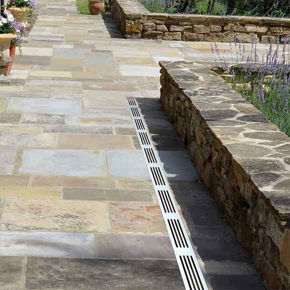
Channel drainage—also called linear drainage—is designed to collect surface water along a continuous line. Typical domestic locations include:
- Across patios and paved paths
- Beside garage doors and entrances
- Near patio doors and level thresholds
- At suitable points on domestic driveways
- Along the edge of landscaped and paved areas
The channel must lead to an appropriate outlet. Do not install a drain that simply transfers water towards a neighbour, public highway or vulnerable part of the property.
Which type of drainage channel should I choose?
The right product depends on its position, expected loading, available depth, required appearance and connection to the wider drainage system.
Standard domestic channel drainage
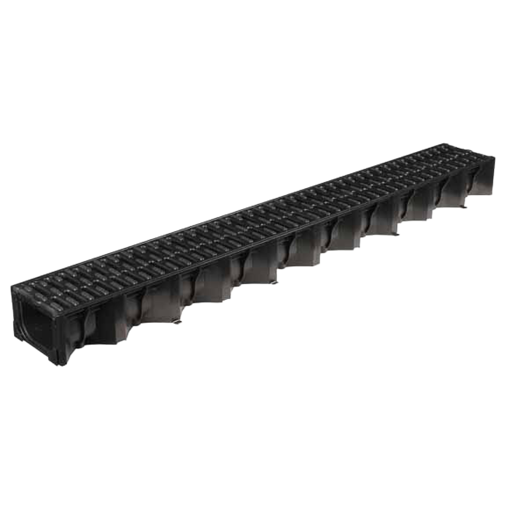
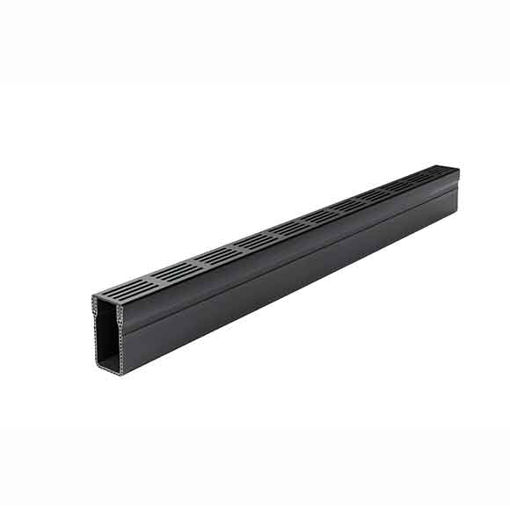
The ACO HexDrain channel with black plastic grate is a lightweight domestic option for patios, paths and suitable residential applications. One-metre sections clip together, and multiple outlet positions help with planning the connection.
Galvanised-grate channel drainage
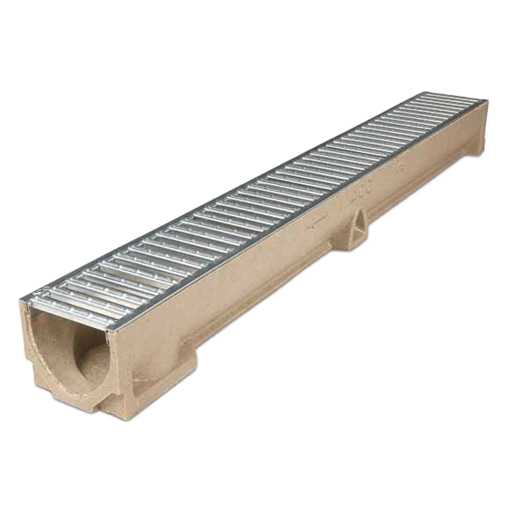
For customers who prefer a metal-grate finish, the ACO RainDrain channel with galvanised steel grate combines a polymer-concrete channel with an interlocking design. It is intended for domestic applications such as patios, paths, pedestrian areas and suitable garage-threshold projects.
Slim threshold drainage
Where a discreet channel is required near a patio door or property entrance, consider the ACO Threshold Drain with black aluminium grating. Its slim profile is designed to reduce water ponding around domestic level thresholds, entrances and landscaped areas.
Check the load class
Do not select a channel by appearance alone. Check the stated load class and the exact position of the drain. Products rated to Load Class A15 are intended for pedestrian areas and light domestic applications, but suitability must be confirmed where vehicle wheels will cross the channel—particularly at driveway entrances or areas used by larger vehicles. Ask the RBS team if you are unsure.
Remember the outlets, end caps and connectors
A complete installation normally requires more than channel lengths and grates. Depending on the chosen system and drainage layout, you may also need:
- HexDrain and RainDrain closing end caps
- HexDrain and RainDrain outlet end caps
- Corner units with vertical outlets
- Threshold drain bottom outlets
- Threshold drain closing end caps
- Suitable pipework and fittings from the below-ground drainage range
Planning every connection before starting helps avoid incompatible parts, unnecessary cuts and drainage runs that cannot discharge correctly.
Channel drainage installation: the basic process
The exact method varies by product and site conditions, so always follow the manufacturer’s current instructions. A typical domestic project involves:
- Identify the source of the surface water and choose a suitable discharge point.
- Plan the line, channel length, outlet position and required accessories.
- Excavate a trench with sufficient room for the specified supporting bed and surround.
- Connect and align the channel sections at the correct finished level.
- Fit end caps, outlets and drainage pipework before completing the surround.
- Protect the grates during surrounding paving or concrete work.
- Test the system with water before completing the installation.
Refer to the official ACO product and installation guidance for product-specific details. Complex drainage, uncertain outlets and areas exposed to significant vehicle loads should be assessed by an experienced contractor.
Driveway drainage and planning in Peterborough
Drainage should be considered before laying or extending a driveway. Peterborough City Council explains that planning permission may be required when more than five square metres of impermeable driveway is installed without provision for water to drain to a permeable area. Options can include permeable surfacing or directing water towards a lawn, border, rain garden or suitable soakaway.
Read the Peterborough City Council SuDS guidance for homeowners before beginning relevant driveway work. Site conditions vary, so seek professional or council advice when necessary.
How to maintain channel drainage
Routine maintenance helps a drainage channel continue working effectively:
- Remove leaves and visible debris from the grate.
- Lift removable grates periodically and clear accumulated silt.
- Check that outlets remain unobstructed.
- Inspect channels and surrounding paving for movement or damage.
- Investigate recurring standing water rather than repeatedly sweeping it away.
Frequently asked questions
Can channel drainage stop water pooling on a patio?
It can help when installed at the correct collection point and connected to a suitable outlet. If the patio contains several low spots or slopes towards the house, parts of the surface may also need to be relaid.
Can I use the same channel drain for a patio and a driveway?
Not automatically. The loading, grate design and installation requirements differ. Confirm the product’s load class and whether vehicles will cross the channel.
Where should a channel drain discharge?
The correct destination depends on the property and local requirements. It may be a suitable permeable area, soakaway or approved drainage connection. Water should not simply be redirected onto neighbouring land or the public highway.
What is threshold drainage?
Threshold drainage uses a narrow channel beside a doorway or entrance to intercept water while maintaining a discreet appearance. It is commonly used near patio doors, level-access thresholds and garage entrances.
How much channel drainage do I need?
Measure the full run and allow for corners, outlets, end caps and connections. Confirm the system’s standard section length and prepare a simple drainage plan before ordering.
Shop channel drainage in Peterborough and Huntingdon
Rose Building Supplies stocks drainage channels, gratings, outlets, end caps and connectors for domestic landscaping and paving projects. Browse our complete channel drainage range online, or explore related products in surface drainage, driveway materials and landscaping supplies.
Peterborough branch
Rose Building Supplies Ltd
Fengate
Peterborough
PE1 5SW
Telephone: 01733 340270
View the Peterborough branch on Google Maps
Huntingdon branch
Rose Building Supplies Ltd
10 The Bridge Centre, St Peters Road
Huntingdon
PE29 7DA
Telephone: 01480 572572
View the Huntingdon branch on Google Maps
Both branches are open to trade and public customers. Visit our branch information page for current details.
Channel drainage collection and delivery areas
Channel drainage products are available for collection from our Peterborough and Huntingdon branches. We also deliver to eligible postcodes covering areas including Wisbech, Stamford, Bourne, Spalding, March, Ramsey, St Ives, St Neots, Corby and surrounding locations.
Minimum order values, delivery charges and lead times vary by postcode, with separate conditions applying to some Corby and wider NN or LE delivery areas. Check our collection and delivery information or contact the team before ordering if you need confirmation for your address.
Our local teams can help you match channels, outlets and accessories for your patio, driveway or threshold drainage project.